The landscape for UX research and design has evolved rapidly. In 2026, many experienced practitioners are finding that the most resilient career path is no longer climbing a traditional corporate ladder, but rather transitioning into independent or fractional UX consulting. This shift offers more control over project scope and business impact, but it also demands a fundamental change in mindset: moving from a specialized researcher to a business owner who sells strategic clarity.

Moving Beyond "Just" Research
As an independent consultant, your value is no longer tied solely to the methods you use or the artifacts you produce. Instead, it is measured by your ability to solve high-stakes business problems for your clients. In 2026, successful consultants are those who position themselves as "strategic partners." You aren't just there to run a usability test; you are there to help a client reduce risk, identify new market opportunities, or accelerate their product discovery process.
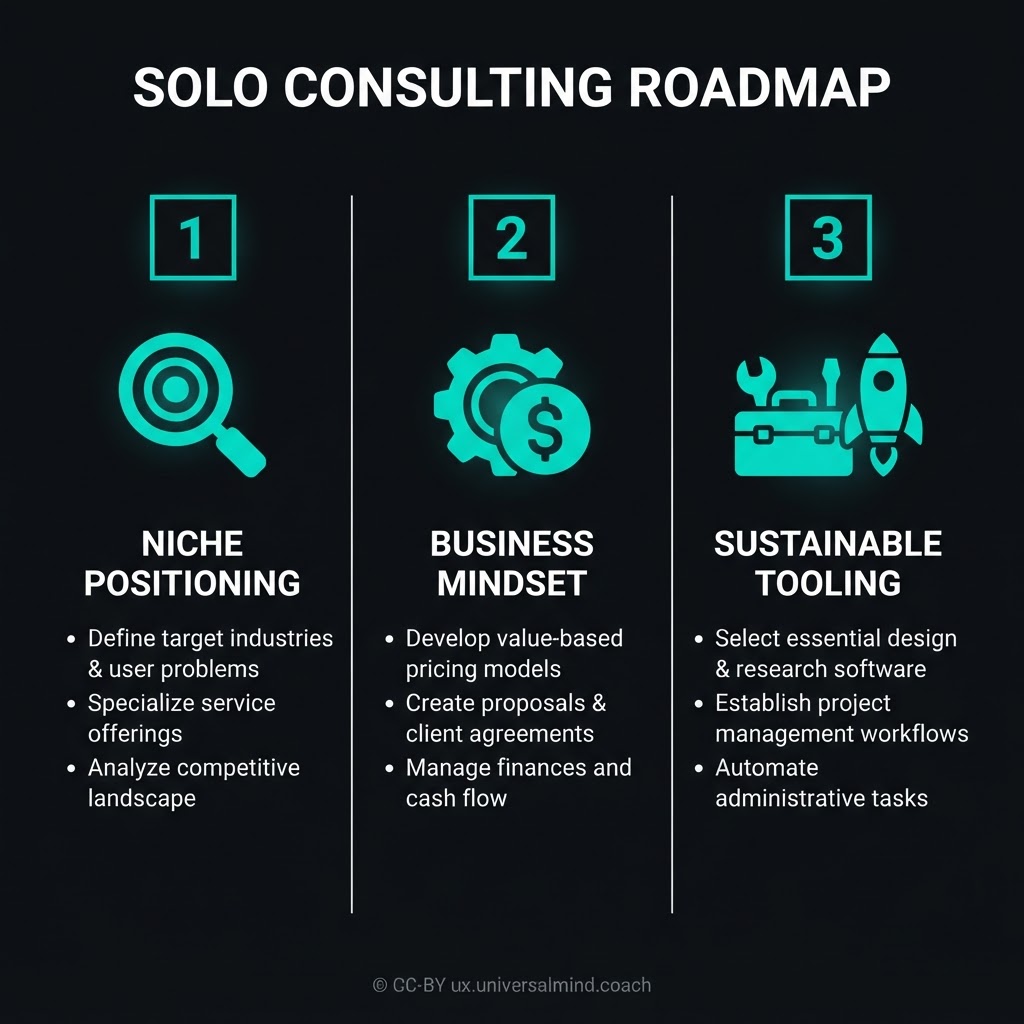
The Three Pillars of Solo Consulting Success
1. Niche Positioning
Generalists often struggle to command premium rates in an era of AI automation. To succeed, define a clear niche. Are you the researcher who specializes in AI-enabled discovery for healthcare startups? Or perhaps the expert in fixing broken insights repositories for mid-market SaaS companies? A sharp, specific niche makes it easier for the right clients to find you.
2. Business-First Mindset
When you transition to consulting, "selling" becomes your second job. You must learn to articulate your research findings in the language of business—ROI, customer churn, acquisition costs, and time-to-market. Clients don’t want to hear about participant recruitment methodology; they want to hear how your research will lead to better product-market fit.
3. Sustainable Tooling
Without a corporate infrastructure, your capacity is your most precious resource. Adopt lean, AI-augmented workflows early. By automating the grunt work of transcription, coding, and basic reporting, you free up your time to do what clients are actually paying for: high-level synthesis, strategic roadmapping, and empathetic user advocacy.
The Bottom Line
Transitioning to independent UX consulting is not just a change in employment status; it’s a career transformation. It requires balancing the rigorous, methodical approach of a researcher with the agility and resilience of a small-business owner. While the path involves more uncertainty, the reward is a practice that is truly your own—built to survive, adapt, and thrive in an increasingly AI-driven market.